
Self-Reliance: Eritrea Vs Burkina Faso
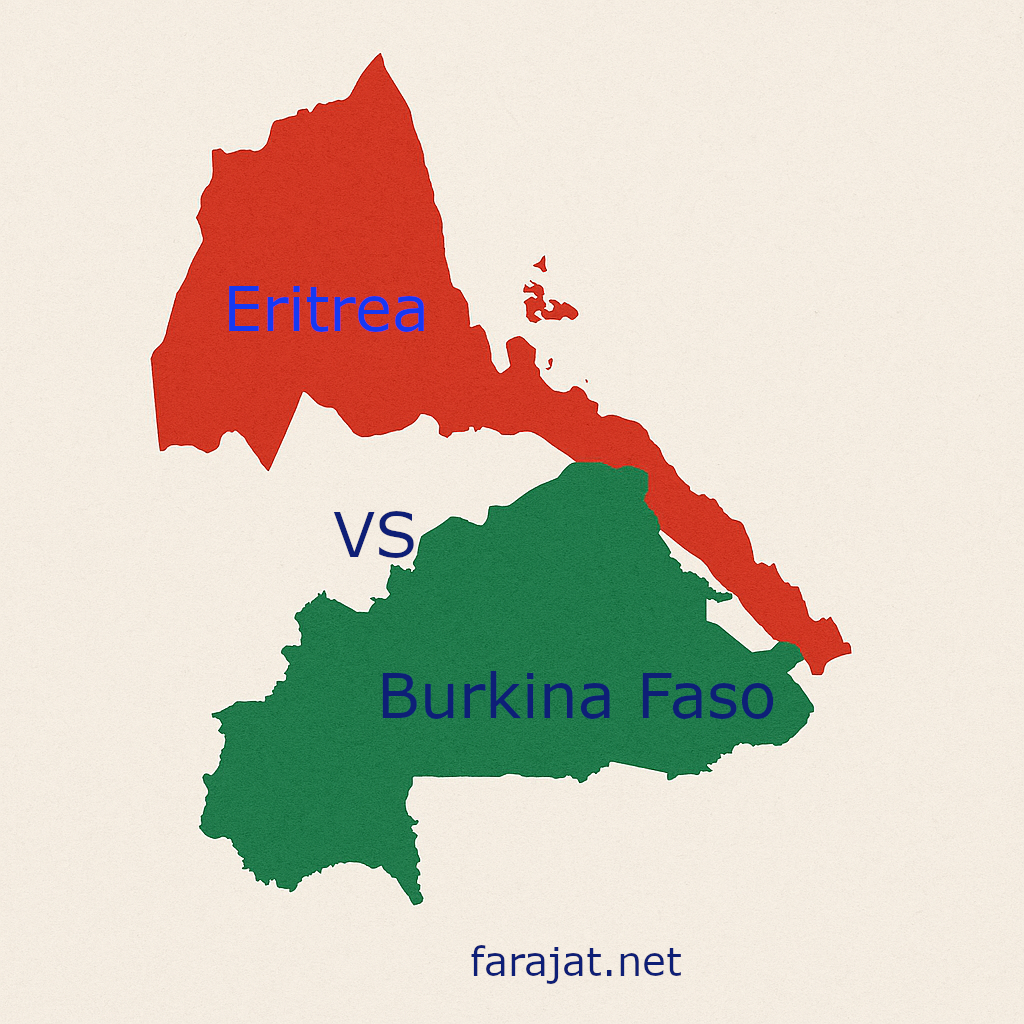
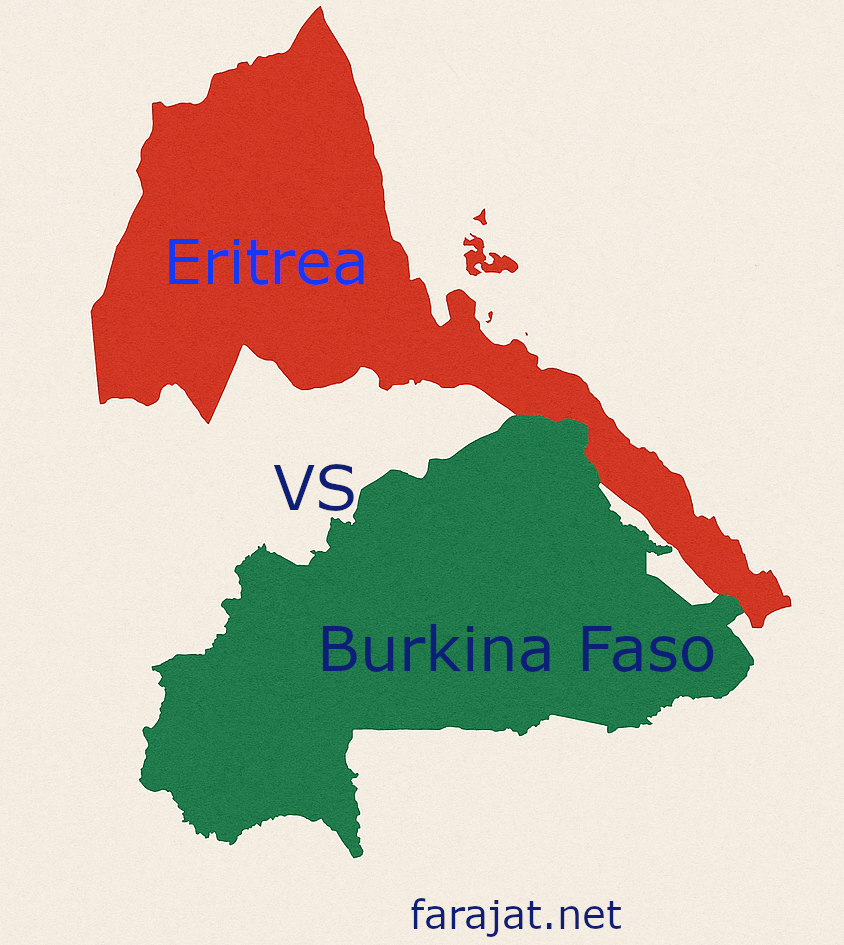
The two countries as African revolutionists for radical changes through self-sufficiency have drawn the attention of many Africans. The two are defined by their regional alliances and the speed of carrying out their respective self-reliance.
As Eritrea was wholly liberated, it chose for its self-reliance the speed of a tortoise. And, Burkina Faso, as it was semi-liberated it chose lightning speed, if possible, for its self-reliance so as to instantly take over the whole country following the expulsion of those foreign corporations that had monopoly on the country’s wealth (agricultural and mineral). Additionally, Burkina Faso had other African (Eritrean) self-reliance experience to learn from by comparison, while Eritrea had only to depend on learning from its own mistakes.
Burkina Faso was convinced, based on the Eritrean experience, that there were no short-cuts to a successful self-reliance without self-efficacy. That was why; the Burkina Faso’s leader invited all Burkina Faso people, inside and outside (Diasporas) to take ownership of their self-reliance revolution. Thus, the Burkina Faso people designed that their self-reliance to be led and run by knowledgeable people selected based on their qualification unlike that of Eritrea who were selected based on their blackmail-ability.
From the combined, Eritrean and Burkina Faso’s, self-reliance experiences it can now be deduced that self-reliance without self-efficacy the result is self-destruction. And, self-destruction leads to one-man rule. And, one-man rule leads to chaos. As the one-man rule takes over the self-efficacy, the self-reliance loses its goals because the chaos holds back the self-reliance’s players from carrying out the tasks and the ability to deal with the challenges faced.
The two countries also appear to have used different strategies to give effect to their self-reliance. While Burkina Faso has used simultaneous approach, applying self-reliance and self-efficacy side by side in order to speed up the country’s capability to govern and control its wealth, Eritrea appears to have followed sequential approach or one at a time.
The applied or followed approaches, simultaneous strategy or sequential strategy, had roles in determining the time element for achieving the desired self-reliance. In the case of Burkina Faso’s, the simultaneous option of strategy has helped to speed up the result or simply shortened the time of self-reliance success. On the part of the Eritrean chosen sequential option of strategy, the track has been uneasy and lengthy in that the time measured was described as at the speed of tortoise. However, Burkina Faso’s experience can be tried by Eritrea to solve the faced problem.
Therefore, having learned from the Burkina Faso’s experience, Eritrea should not remain stuck in its self-reliance mud. If there is a will, there is a way, as the adage reminds, let Eritrea invite its entire people to take ownership of their self-reliance revolution. No doubt, Eritrea has a vivid picture of where its people are. Let it first start with those who are around, including those inside and outside (the sybarites or those who indulge festival parties and the sycophants or those who are embassy frequenters for favors). Thence, upon full-fledged function of its self-reliance, the short-handedness of the workforce will compel reconciliation between the one-man rulers and the multi-man rulers in Eritrea.
Looking at the basis of reasoning for inviting the whole population of Burkina Faso to participate as to meet the demands of their self-reliance, Eritrea should also have a reason. The Eritrean self-reliance being a huge project it should not be deprived of its right to have full participation of the entire needed force, just like in human being, the heart and the brain need enough repeat enough blood supply in order for the body to function properly.
Regional Alliances
The two countries’ self-reliance revolutions have defied in their own ways their regional clubs: the Sanaa Club of Horn of Africa inclusive of Yemen and the West Africa Club. While the Sanaa Club was founded on saving the Horn of African countries from becoming another Somalia ( a failed state), the West African Club was founded on protecting the elected governments of the region from coup d’états.
Burkina Faso that armed itself with supporting explanations for its revolution knew what it-is-like to be in the shoes of Eritrea for its commitments to the objectives of ending foreign-dependency and declaring self-reliance. Although the Eritrean situation was a self-isolation, the Burkina Faso’s isolation was based on labelling its revolution as a coup d’état. However, some neighboring countries that at first resented the Burkina Faso’s attitude, upon confirming that its revolution was for a total liberation of the country, they rushed to support its position.
As for Sanaa Club that incorporated confederation of member countries was rejected by Eritrea because it (Eritrea) was not ready to have federal democratic system as was required by the Club. Anyway, the Sanaa Club did not last long. Unlike the West Africa Club whose enemy is known, the Sanaa Club’s enemy still remains a mystery. The mystery plays still is impacting all Sanaa Club members by sending one by one to becoming a failed state. Because Eritrea is the only safe country in the region, the blame of masterminding the failed-statehood fell on Eritrea. Given Eritrea’s financial strength and capacity, however, it (Eritrea) cannot quality as the mastermind.
Some people, guided by their analysis of the region’s problems, believe that the mystery players, having taken into consideration the Eritrean leader’s ambition to stretch his control wings over the whole region, were using Eritrea to look like participating in what is going on in the region. Accordingly, if that does not make Eritrea the mastermind, for sure, it makes a room for it to be called a component. Some others exonerate Eritrea on the ground that itself is a victim but could have been left alone because the mystery players believe Eritrea is a self-destroying country.
According to bottom-liners, whatever the cause is, Eritreans are fleeing joblessness and the horrible life in war-ditches. Those facts are militating against the good names of Eritrea and the Eritreans.
No doubt, Eritrea might have suffered under the international embargoes and its own self-isolation. Yet, looking at Burkina Faso, a country that is besieged and surrounded by adversaries, its speedy self-reliance resulted in more rolling up of sleeves. And, the more rolling ups of sleeves meant more creations of jobs that resulted in more inflows of its diasporas to fill the jobs. Whereas, the over tightening of belts in Eritrea is forcing Eritreans to flee their country.
It is time for Eritrea to give up its belt tightening and speed up its self-reliance. The self-reliance countries are known for manufacturing everything they need, including military equipment. And, Eritrea whose self-reliance revolves around “money is power,” should switch to “industrialization/manufacturing is power.” Indeed, Eritrea should galvanize itself into immediate action declaring that it is lifting its embargo on its Diasporas and, as well, abandoning the speed of tortoise for its self-reliance.
Let the high speed in lieu of tortoise’s be a spring of devotion to nation building,
Mamino
Short URL: https://english.farajat.net/?p=11547


 Posted by