

farajat 28/10/2026
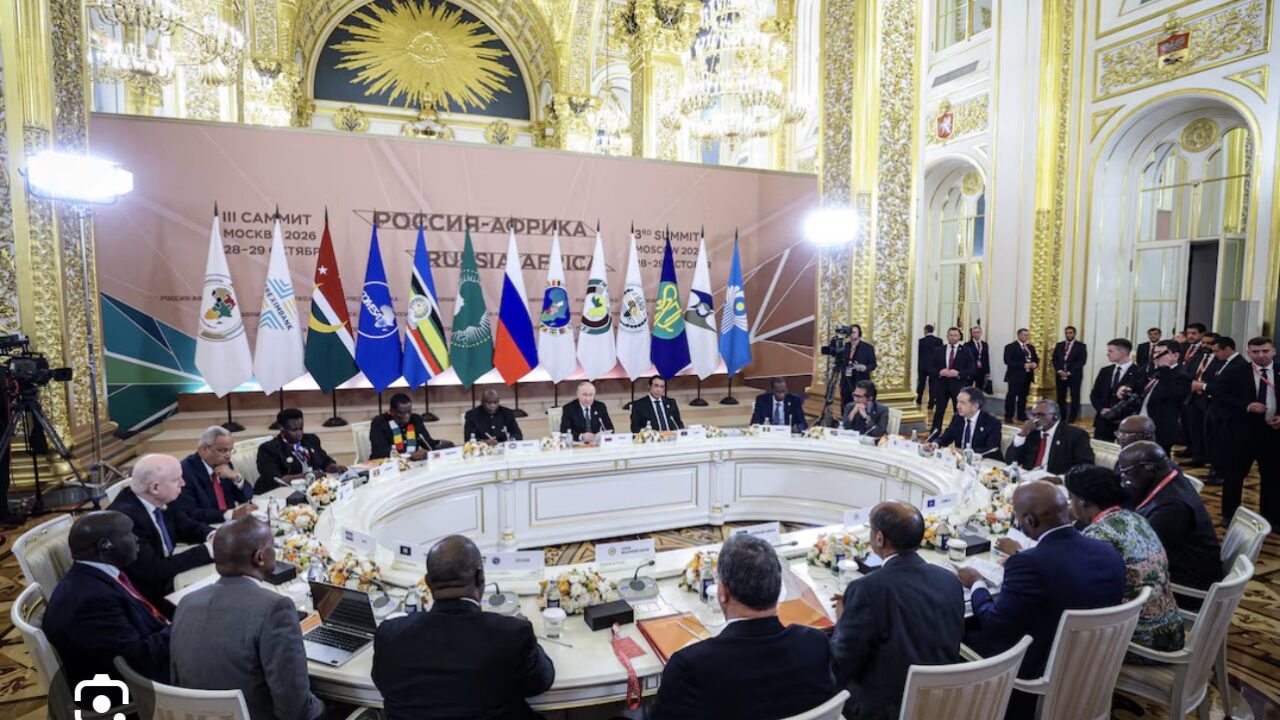
MOSCOW — The second day of the Russia-Africa Summit unfolded in Moscow on Thursday, drawing high-level delegations from 48 nations—including 22 African heads of state—as Russia seeks to deepen economic and strategic ties across the continent.
The high-stakes summit opened Wednesday under the co-chairmanship of Russian President Vladimir Putin and Burundian President Évariste Ndayishimiye, who currently serves as Chairperson of the African Union.
At the heart of the gathering is a push to expand bilateral trade, which recently climbed to $27 billion. Delegations are slated to finalize 33 new trade agreements alongside a landmark joint declaration on artificial intelligence. Talks throughout the week are covering critical areas of collaboration, including energy, food security, agriculture, higher education, and advanced technology—including nuclear cooperation.
The diplomatic push comes against a backdrop of heightened regional volatility, with several attending nations—notably Sudan, Eritrea, and Ethiopia—grappling with internal conflicts and rising geopolitical friction.
Among the notable arrivals was Eritrean President Isaias Afwerki, accompanied by Foreign Minister Osman Saleh and his son, Abraham Afwerki. Intriguingly, the Eritrean delegation arrived aboard an Emirati aircraft operated by a Saudi Arabian carrier—a notable detail given the recent diplomatic strain and exchange of accusations between Asmara and Abu Dhabi.
Meanwhile, Ethiopian Prime Minister Abiy Ahmed’s presence generated significant buzz, amidst reports that Addis Ababa has secured a major defense package comprising 12 Sukhoi Su-35 fighter jets and an S-400 air defense system from Moscow.
Addressing the regional friction, Russian officials reiterated Moscow’s willingness to host side-line mediation talks between Ethiopia and Eritrea in hopes of defusing tensions and charting a path toward stability.


Comments